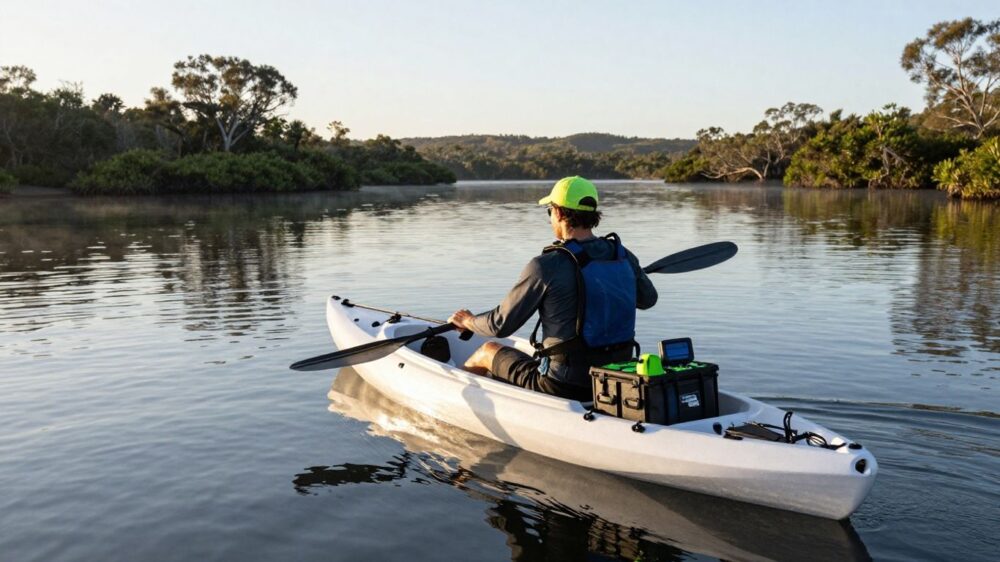
Start with the right kayak and fishing style
A good kayak fishing setup starts before I add a single rod holder. I first think about where I will paddle, how I prefer to fish, and how much equipment I genuinely need to carry. The right hull makes the day calmer, while the wrong one can leave me fighting the boat instead of enjoying the water.
Sit-on-top versus sit-in kayaks
A sit-on-top kayak is usually the simpler choice for fishing because it gives me more room to move, easier access to gear, and a straightforward way to get back aboard after a capsize. Water can wash over the open deck, so I need to dress for the conditions and keep loose items secured. Self-draining scupper holes help clear water, although I still check that they are free from debris.
A sit-in kayak offers shelter from wind and spray and can feel efficient on cooler trips. Its enclosed cockpit also makes re-entry more difficult if I capsize. For a first fishing boat, I generally favour the open layout of a sit-on-top, especially when I expect to cast, land fish, and handle equipment often.
Choosing between recreational and fishing kayaks
A recreational kayak can work for an occasional outing, but its narrow cockpit and limited storage may become frustrating once I add tackle and rods. Fishing kayaks are commonly designed with wider standing areas, accessory mounting points, and storage that is easier to reach from the seat. Those features add weight, so I consider how I will carry and transport the boat as well as how it behaves on the water.
I do not need the most heavily equipped model to begin. I look for a stable platform, a comfortable seat, practical storage, and enough capacity for my body, safety equipment, water, and fishing gear. A modest boat that I can load confidently is often more useful than an elaborate one that is difficult to move.
Matching the kayak to freshwater or saltwater trips
Freshwater trips may involve sheltered lakes, rivers, or slow-moving estuaries, each with different hazards. Saltwater adds tide, wind, current, changing weather, and the possibility of exposed crossings. I check local access rules, launch conditions, and the forecast before deciding what level of equipment and experience a trip requires.
For coastal fishing, I pay particular attention to corrosion-resistant hardware, sealed storage, and a reliable way to rinse the kayak afterwards. In rivers, a manageable length and predictable turning can matter more than outright speed. The best choice is the one suited to the water I will actually fish rather than the boat that looks most capable on a showroom floor.
Balancing stability, speed, and storage
A broad kayak generally feels reassuring when I turn, cast, or reach for a net, but extra width can reduce speed and make long paddles tiring. A sleeker hull may cover distance more easily while demanding better balance. Storage also affects stability: heavy items placed high or to one side can make an otherwise sound kayak feel awkward.
I compare the main trade-offs before buying rather than trying to solve every limitation with accessories. This simple guide helps me frame the decision:
| Priority | What I look for | Likely compromise |
|---|---|---|
| Stability | A broad, predictable platform | More drag while paddling |
| Speed | A longer, slimmer hull | Less forgiving movement |
| Storage | Hatches, tankwell, and deck space | More weight and clutter potential |
| Portability | Manageable length and weight | Less room for equipment |
The aim is not perfect performance in every category. I want a kayak that feels steady enough for my fishing style, still moves comfortably, and leaves sensible space for the equipment I can safely carry.
Build your essential kayak fishing setup
Once I have chosen the boat, I add equipment in layers. I begin with items that help me control the kayak and keep a rod, paddle, or tackle box secure. Only then do I consider electronics and specialist accessories, because every extra fitting adds weight, cost, and another object that can get in the way.
Rod holders and paddle management
Rod holders are most useful when I can reach them without twisting too far or leaning across the kayak. I position one where I can stow a rod while paddling and another where it will not interfere with casting or landing a fish. I check that the holder suits the rod butt and that the rod cannot bounce out in choppy water.
A paddle park or simple paddle holder keeps the blade from drifting across the cockpit while I fish. I practise moving from paddle to rod and back again on calm water first. If the paddle is always sliding under my legs, the layout needs changing before I venture farther from shore.
Tackle storage that stays within reach
I keep the tackle I use most often in a small, secured container close to my seat. Deep storage is useful for spare equipment, but the items needed during a cast should not require me to turn around or stand up. Easy access matters more than maximum capacity when the deck is moving beneath me.
For a simple first trip, I usually separate equipment into a few practical groups:
- Lures, hooks, and terminal tackle for the planned technique.
- Pliers, line cutters, and a small measuring tool.
- Spare line, soft plastics, and basic repairs.
- Food, water, and personal items in a sealed dry bag.
This keeps the working area predictable and makes it easier to notice when something has shifted. I also secure the container with a strap or attachment point, rather than trusting friction alone.
Anchor systems and drift control
An anchor can hold position in suitable conditions, but it also introduces a line that may snag the paddle, rudder, vegetation, or another boat. I choose a system that I can release quickly and practise deploying it in shallow, calm water. In moving water, I take extra care because an anchor can create serious strain on the kayak.
A drift chute can slow my movement without fixing the kayak to the bottom. Sometimes the simplest option is to let the wind move me and make repeated casts along a bank. I treat any position-holding system as a tool, not a substitute for watching the weather and current.
Fish finders, GPS units, and batteries
Electronics can help me understand depth, location, and the water beneath the kayak, but they are not essential for learning to fish from one. If I fit a fish finder or GPS unit, I mount it where I can read it without blocking my paddle stroke. I use a properly protected battery compartment and keep connections dry.
I test the whole arrangement at home, including charging, cables, seals, and switches. A screen that goes blank halfway through a trip should be an inconvenience rather than an emergency. I still carry a dependable way to navigate back and pay attention to landmarks, weather, and daylight.
Organize the deck for comfort and efficiency
A well-organised deck lets me concentrate on fishing instead of searching for equipment. I arrange items according to how often I use them and how risky they would be to retrieve while moving. Before every launch, I run through the layout in my head and remove anything that has no clear purpose.
Positioning gear for easy access
I place frequently handled items within a comfortable reach of my seated position. Pliers, a lure box, water, and a landing net should not be behind me if I can avoid it. I test each position with the paddle across my lap, because an arrangement that works in the garage may block my stroke on the water.
Heavy equipment belongs low and near the centre of the kayak. Light items can go farther away, provided they are secured. I also leave enough room to turn, brace, and manage a fish without catching clothing or line on an accessory.
Keeping the cockpit clear and uncluttered
The cockpit is where I need the most freedom, so I keep it free of bags, spare rods, and loose packaging. Anything that can roll under my feet can become a distraction at the worst moment. I use covered containers for small items and remove rubbish as soon as I create it.
Line deserves particular attention. I check that it cannot wrap around a foot, rudder control, anchor line, or paddle leash. A clean cockpit is not merely tidy; it gives me more options if I need to brace, turn, or re-enter the kayak.
Adjusting the seat for long days on the water
I adjust the seat before launching, not after discomfort has already set in. My back should feel supported without being forced into one rigid position, and my legs should have enough contact with the kayak to help me balance. I make small changes to height, back support, and foot position until paddling feels natural.
A high seat can improve visibility and make casting pleasant, but it may also raise my centre of gravity. I test any elevated position close to shore and avoid assuming that comfort automatically means greater stability. Breaks, water, and a change of posture are part of a sustainable day on the water.
Using crates, rails, and mounting tracks
A crate can organise rods and tackle, while rails and mounting tracks allow me to move accessories without drilling new holes. I prefer attachments that are easy to remove when I transport or store the kayak. Every fitting should be tight enough for use but still accessible for inspection and cleaning.
I avoid filling every available mounting point. Symmetry may look neat, but the most useful layout is the one that supports my movements. I leave clear space around handles, hatches, and drainage points so routine lifting and rinsing remain straightforward.
Add safety and emergency equipment
Safety equipment is part of the kayak fishing setup from the first outing, not an upgrade for later. I plan for a capsize, separation from the kayak, a changing forecast, and a delayed return. The exact kit depends on the water and distance from shore, but it must be wearable, reachable, and maintained.
Choosing a properly fitted personal flotation device
I wear a properly fitted personal flotation device designed for paddling. It should allow my arms to move freely, stay secure when I enter the water, and sit comfortably while I cast. I check the fit according to the manufacturer’s directions and replace equipment that is damaged or no longer functions as intended.
A PFD stored in a hatch cannot help me during an unexpected capsize. I also avoid overloading its pockets, because excess weight can affect comfort and movement. Before a longer trip, I practise paddling and reaching while wearing it.
Carrying a whistle, light, and signaling gear
A whistle gives me a simple way to attract attention without relying on my voice. I keep it attached to my PFD where I can reach it with either hand. Depending on the trip, I may also carry a waterproof light, phone in a protective case, and other suitable signalling equipment.
I check the charge, batteries, and attachment points before leaving. Signalling gear is only useful if I can find it quickly in poor light or after entering the water. I keep it separate from items that are likely to be buried under tackle.
Securing a paddle leash and spare paddle
A paddle leash can stop the kayak and paddle from separating while I deal with a fish or recover from a capsize. I attach it in a way that does not interfere with my stroke, and I inspect it for wear. I do not wrap loose cord around my body or create a snag risk around my feet.
For trips where a paddle failure would leave me stranded, I carry a spare paddle secured within reach. I practise releasing and using it before I need it. If I use a pedal system, I still regard a paddle as valuable backup equipment.
Preparing for weather, current, and capsize risks
I check the forecast, tide or current information, wind direction, launch point, and expected return time. I tell someone where I am going and when I plan to be back. Conditions can change quickly, so I set a turn-around point rather than relying on optimism.
I practise a controlled capsize and re-entry in a safe, supervised setting before attempting a remote trip. I also learn how my kayak behaves when loaded with fishing gear. A calm rehearsal exposes problems with straps, clothing, and storage while I am still close to help.
Set up your kayak for different fishing techniques
The best setup changes with the way I fish. A bass session may reward quick access to several lures, while saltwater trips can demand more attention to corrosion and weather. I make one change at a time so I know whether it genuinely improves the boat.
Rigging for bass and freshwater fishing
For bass and other freshwater fishing, I keep a small selection of lures within reach and leave space for repeated casting. A rod holder behind my seat can store a second rod, while the active rod stays clear of nearby fittings. I organise tackle by technique rather than bringing every lure I own.
In narrow creeks or around cover, a compact setup is easier to manage. I secure hooks and tools carefully, especially when turning or reaching for a fish. Before moving to a new area, I stow the lure and check that the paddle path is clear.
Preparing for inshore saltwater fishing
Inshore saltwater trips require a careful look at wind, tide, boat traffic, and landing points. I rinse the kayak, rods, fittings, and electronics with fresh water after each outing. Corrosion can affect small fasteners and electrical connections before the damage is obvious.
I carry only the tackle suited to the planned conditions and keep spare gear sealed. A secure landing net, line cutters, and a way to manage a fish without leaning too far over the side are especially useful. If the forecast becomes doubtful, I shorten the trip rather than trying to make the equipment compensate.
Adapting the kayak for fly fishing
Fly fishing needs a clear casting area and careful line management. I remove unnecessary objects from in front of me and keep the fly line away from pedals, straps, and sharp edges. A stripping basket or suitable line-management method can help, but I first practise the cast from the seated position.
I place the rod holder where it will not catch the line and use simple, accessible storage for flies and tools. Standing may provide a better casting angle in a stable kayak, but I only do so after testing balance in calm, shallow water. Conditions and confidence should set the limit.
Setting up for trolling and live bait
Trolling benefits from a rod holder that keeps the rod secure while leaving my hands available for steering and observation. I make sure the line path will not cross the paddle, rudder, or anchor system. I also stay alert to snags and changing depth rather than treating the rod holder as an automatic solution.
Live bait requires a suitable container or aerated arrangement that will not shift the kayak’s balance. I keep the tank low, secure, and easy to access, then monitor how the added water changes handling. If the boat feels different when loaded, I test it again close to shore before travelling farther.
Test, transport, and improve your rig
A new rig is unfinished until I have used it in realistic conditions. I test every adjustment close to shore, then take short trips before committing to a longer day. This approach reveals awkward reaches, loose fittings, and unnecessary weight without turning a small problem into a serious one.
Checking stability before launching
I check stability with the kayak loaded as I intend to use it, including water, tackle, rods, and safety equipment. From a seated position, I make gentle weight shifts and practise reaching for a nearby item. I never test the limit by making a sudden movement far from shore.
If I plan to stand, I practise in calm, shallow water with the paddle ready for support. I also consider how wind, waves, current, and a hooked fish may change the feeling of the kayak. Stability is a combination of the hull, the load, and my own movements.
Securing rods and loose equipment
I use leashes or suitable retention methods for equipment that would be difficult to replace or dangerous to lose. Rods sit in holders rather than lying across the cockpit, and small boxes stay closed when I am paddling. I check every strap after loading because a secure item on land can become loose once the kayak starts moving.
Before launch, I run through a short check:
- PFD fitted and signalling gear attached.
- Paddle, spare paddle, and leash secured.
- Rods, tackle, electronics, and batteries protected.
- Hatches, drain plugs, and access covers closed.
This takes little time and gives me a consistent departure routine. I repeat the check whenever I stop, rearrange equipment, or prepare to return through moving water.
Loading and transporting the kayak safely
I lift with help when the kayak is too heavy or awkward to handle alone. During vehicle transport, I use suitable supports and tie-downs, protect the hull from sharp contact, and check the load again after a short drive. I also remove loose accessories that could blow away or be damaged.
At the launch site, I keep the kayak stable while loading and avoid dragging it over rough surfaces unnecessarily. I plan the route from the vehicle to the water before carrying the boat. Safe transport is part of the outing, not a chore separate from it.
Making adjustments after your first trips
After each trip, I note what I reached for, what stayed untouched, and what caused irritation. I move one item at a time and test the change on another short outing. This prevents me from creating a complicated layout based on a single awkward moment.
I rinse and inspect the kayak, dry storage areas, recharge equipment, and replace damaged straps or lines. Over time, the best kayak fishing setup becomes a familiar system rather than a pile of accessories. I keep refining it around comfort, safety, and the kind of water I actually enjoy.
Conclusion
A beginner-friendly kayak fishing setup does not need every available accessory. I start with a suitable kayak, add secure and reachable equipment, protect the cockpit from clutter, and practise the safety skills that make the layout useful. Small tests and thoughtful adjustments will take me further than buying more gear without a plan.
Frequently Asked Questions
What is the best kayak for a beginner who wants to fish?
I would start with a stable sit-on-top kayak that has practical storage, a comfortable seat, and enough capacity for me and my equipment. The best choice also needs to suit the water, launch conditions, and transport method I can manage.
Do I need a fishing kayak to begin kayak fishing?
No, but a recreational kayak may have less storage, fewer mounting options, and a less convenient seating position. I would only use one after confirming that I can carry the required safety equipment without making the cockpit crowded.
How much tackle should I take on my first trip?
I would take a small selection suited to the location and technique rather than my entire tackle collection. Less gear leaves more room to move and makes it easier to keep the kayak balanced and organised.
Should I stand up in a fishing kayak?
Only if the kayak is designed for it and I have practised safely in calm, shallow water. I keep the paddle available for support and stop standing if wind, current, waves, or fatigue make the movement uncertain.
Is a paddle leash necessary when fishing from a kayak?
A paddle leash can help prevent the paddle from drifting away while I handle a fish or recover from a capsize. It must be fitted so it does not create a snag hazard or interfere with normal paddling.
What safety gear should I carry on every trip?
I wear a properly fitted personal flotation device and carry a whistle, a suitable light when relevant, a secured paddle, and a way to communicate. I also check the forecast, tell someone my plan, and adapt the equipment to the distance and conditions.
How can I keep my kayak fishing setup from becoming cluttered?
I give each item a clear place, keep frequently used gear within reach, store heavy equipment low, and remove anything I did not use. After each trip, I adjust one part of the layout rather than adding more accessories automatically.